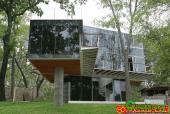
Urban Landscapes selects 28 outstanding landscape projects.Through comprehensive presentation of pictures, detailed analysis of technical drawings and text descriptions, this book fully reveals the panorama of contemporary landscapes in China. With a unique perspective and rich contents, the book will bring inspiration for landscape designers.
Code:
Content of this section is hidden, You must be registered and upgrade your account to see this content.
🔽🔽🔽🔽🔽🔽🔽🔽🔽
See this link to read how you can remove this limitation:
👉 CLICK HERE 👈
Code:
Content of this section is hidden, You must be registered and upgrade your account to see this content.
🔽🔽🔽🔽🔽🔽🔽🔽🔽
See this link to read how you can remove this limitation:
👉 CLICK HERE 👈
Seismic evaluation of a 56-storey residential reinforced concrete high-rise building
based on nonlinear dynamic time-history analyses.
Author(s): Siamak Epackachi, Rasoul Mirghaderi1, Omid Esmaili, Ali Asghar Taheri Behbahani and Shahram Vahdani.
Published By:Wiley Online Library (wileyonlinelibrary.com).
Published Year:8 March 2010
Size: 1,30 MB
Quality:Original preprint
Abstract: In recent decades, shear walls and tube structures have been the most appropriate structural forms for the construction of high-rise concrete buildings. Thus, recent Reinforced Concrete (RC) tall buildings have more complicated structural behaviour than before. Therefore, studying the structural systems and associated behaviour of these types of structures is very important. The main objective of this paper is to study the linear and nonlinear behaviour of one of the tallest RC buildings, a 56-storey structure, located in a high seismic zone in Iran. In this tower, shear wall systems with irregular openings are utilized under both gravity and lateral loads and may result in some especial issues in the behaviour of structural elements such as shear walls and coupling beams. The analytical methodologies and the results obtained in the evaluation of life-safety and collapse prevention of the building are also discussed. The weak zones of the structure based on the results are introduced, and a detailed discussion of some important structural aspects of the high-rise shear wall system with consideration of the concrete time dependency and constructional sequence effects is also included.
Code:
Content of this section is hidden, You must be registered and upgrade your account to see this content.
🔽🔽🔽🔽🔽🔽🔽🔽🔽
See this link to read how you can remove this limitation:
👉 CLICK HERE 👈
The book contains the invited keynote and theme lectures presented at the 4th International Conference on Geotechnical Earthquake Engineering (4ICEGE). The conference was held in Thessaloniki, Greece, from 25 to 28 June, 2007, and was organized by the Technical Committee of Earthquake Geotechnical Engineering (TC4) of the International Society of Soil Mechanics and Geotechnical Engineering (ISSMGE), the Hellenic Scientific Society of Soil Mechanics and Geotechnical Engineering and the Laboratory of Soil Dynamics and Geotechnical Earthquake Engineering of Aristotle University of Thessaloniki.
It provides a comprehensive overview of the progress achieved to date in soil dynamics and geotechnical earthquake engineering, as well as in engineering seismology and seismic risk assessment and management. In situ and laboratory testing, theoretical issues and numerical modeling of soil dynamics, seismic hazard with emphasis on the long-period ground motion displacements, site effects and microzonation, liquefaction assessment and mitigation, soil-structure interaction, performance based design of geotechnical structures, earthquake resistant design and performance of shallow and deep foundations, retaining structures, embankments and dams, underground structures and lifelines, are all among the different topics covered in this book. Interdisciplinary subjects such as vulnerability assessment of, transportation networks and lifelines as well as of geotechnical structures are also discussed. Finally, the book provides a thorough presentation of the existing worldwide important large-scale testing facilities and geotechnical strong ground motion arrays.
The book is organized in nineteen chapters written by distinguished experts and includes the 2nd Ishihara Lecture given by Prof. Izzat M. Idriss in honor of Prof. Kenji Ishihara. The aim is to present the current state of knowledge and engineering practice, addressing recent and ongoing developments while also projecting innovative ideas for future research and development.
Audience
Earthquake geotechnical and structural engineers, civil engineers, geologists, geophysicists and seismologists will find in this book the most recent advances in soil dynamics, earthquake and geotechnical engineering, as well as their interfaces with geology, geophysics and engineering seismology. It is of interest not only to scientists, engineers and students, but also to those interested in earthquake hazard assessment and mitigation.
Code:
Content of this section is hidden, You must be registered and upgrade your account to see this content.
🔽🔽🔽🔽🔽🔽🔽🔽🔽
See this link to read how you can remove this limitation:
👉 CLICK HERE 👈
Code:
Content of this section is hidden, You must be registered and upgrade your account to see this content.
🔽🔽🔽🔽🔽🔽🔽🔽🔽
See this link to read how you can remove this limitation:
👉 CLICK HERE 👈
Code:
Content of this section is hidden, You must be registered and upgrade your account to see this content.
🔽🔽🔽🔽🔽🔽🔽🔽🔽
See this link to read how you can remove this limitation:
👉 CLICK HERE 👈
Code:
Content of this section is hidden, You must be registered and upgrade your account to see this content.
🔽🔽🔽🔽🔽🔽🔽🔽🔽
See this link to read how you can remove this limitation:
👉 CLICK HERE 👈
Abstract: It is the first upload of any real time DEA report in CivilEA or any other civil engineering forums. All the effort goes to our assessor and who complied this report as per our guideline and code prescribed rules. I have dedicated this report to all structural engineer who are working to ensure the safety of any building or structure. Also put your valuable comments so that we can upgrade the report standard.
On 14 December 2013, ARUP carried out a visual structural survey of this project. They have major concern about the following conditions in a factory building.
Design check all columns, beams and slabs. Create loading plans and heights to match actual structural code capacity.
Mezzanine: Uncontrolled loading on cantilever
Mezzanine: Plan and height restrictions to be introduced to prevent future overloading. (Loading plans in line with design loads from engineer)
We carried out a Detailed Engineering Assessment of this structure especially considering the conditions described above and step by step carried out the remediation criteria.
A detailed calculation and analysis has been described in the rest of the report.
Code:
Content of this section is hidden, You must be registered and upgrade your account to see this content.
🔽🔽🔽🔽🔽🔽🔽🔽🔽
See this link to read how you can remove this limitation:
👉 CLICK HERE 👈
If you face any problem in downloading, please let me know . . .
Code:
Content of this section is hidden, You must be registered and upgrade your account to see this content.
🔽🔽🔽🔽🔽🔽🔽🔽🔽
See this link to read how you can remove this limitation:
👉 CLICK HERE 👈
This book presents a new approach to modeling carbon structures such as graphene and carbon nanotubes using finite element methods, and addresses the latest advances in numerical studies for these materials. Based on the available findings, the book develops an effective finite element approach for modeling the structure and the deformation of grapheme-based materials. Further, modeling processing for single-walled and multi-walled carbon nanotubes is demonstrated in detail.
Table of contents :
Front Matter....Pages i-xiii
Nanotubes....Pages 1-13
Interatomic Bonding....Pages 15-25
Finite Element Modeling of Nanotubes....Pages 27-46
Nanotube Modeling Using Beam Element....Pages 47-61
Linear Finite Element Analysis of Nanotubes....Pages 63-106
Non-linear Finite Element Analysis of Nanotubes....Pages 107-131
Effect of Geometrical Parameters on Tensile Properties of Nanotubes....Pages 133-155
Finite Element Analysis of Multi-walled Nanotubes....Pages 157-163
Influence of Defects on the Strength of Graphene and Carbon Nanotube....Pages 165-173
Mechanical Behavior of Carbon Nanotube-Reinforced Polymer Composites....Pages 175-212
Code:
Content of this section is hidden, You must be registered and upgrade your account to see this content.
🔽🔽🔽🔽🔽🔽🔽🔽🔽
See this link to read how you can remove this limitation:
👉 CLICK HERE 👈
Concrete structures often suffer from cracking that leads to much earlier deterioration than designed service life. To prevent such deterioration, regular inspection of cracks in concrete structures and their repair are usually carried out by means of some kind of human intervention.
Once cracking occurs in reinforced concrete members, not only is the stiffness reduced but steel bars corrosion also occurs due to the permeation of rain and aggressive substances, reducing structural safety and serviceability. In order to avoid the dangerous situations caused by such deterioration, application of proper maintenance systems is required.
Self-healing, or autogenous healing, of concrete and reinforced concrete is a phenomenon that has been studied by various researchers. Reviews on healing of cracks can be found for example in Lauer & Slate (1956), Jacobsen et al. (1998) and de Rooij & Schlangen (2011).
Many experimental results and practical experiences have demonstrated that cracks in concrete have the ability to heal themselves, reducing water flow through cracks over time.
Code:
Content of this section is hidden, You must be registered and upgrade your account to see this content.
🔽🔽🔽🔽🔽🔽🔽🔽🔽
See this link to read how you can remove this limitation:
👉 CLICK HERE 👈
Code:
Content of this section is hidden, You must be registered and upgrade your account to see this content.
🔽🔽🔽🔽🔽🔽🔽🔽🔽
See this link to read how you can remove this limitation:
👉 CLICK HERE 👈
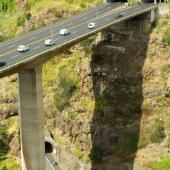
The ever-increasing traffic demands, coupled with deteriorating condition of bridge structures, present great challenges for maintaining a healthy transportation network. The challenges encompass a wide range of economic, environmental, and social constraints that go beyond the technical boundaries of bridge engineering. Those constraints compound the complexity of bridge projects and motivate innovations in bridge engineering technology towards the design and construction of sustainable bridges. The sustainability aims at minimizing the cost of bridge construction projects and the associated environmental impact on the society, while maintaining healthy economic development.
On August 24–25, 2015, bridge engineers from all over the world gathered at the 8th New York City Bridge Conference to discuss and share experiences on the construction and maintenance of sustainable bridge structures.
This volume contains a selection of papers that were presented at the conference. The peer-reviewed papers are valuable contributions to the state of the art in bridge engineering and of archival quality.
Code:
Content of this section is hidden, You must be registered and upgrade your account to see this content.
🔽🔽🔽🔽🔽🔽🔽🔽🔽
See this link to read how you can remove this limitation:
👉 CLICK HERE 👈
Code:
Content of this section is hidden, You must be registered and upgrade your account to see this content.
🔽🔽🔽🔽🔽🔽🔽🔽🔽
See this link to read how you can remove this limitation:
👉 CLICK HERE 👈
Sustainable Buildings and Structures collects the contributions presented at the 1st International Conference on Sustainable Buildings and Structures (Suzhou, China, 29 October-1 November 2016). The book aims to share thoughts and ideas on sustainable approaches to urban planning, engineering design and construction. The topics discussed include:
- Civil engineering
- Structural approaches, including new materials
- New technologies and new techniques
- Green building and carbon neutral approaches to design and construction
- Sustainability, urban planning and development.
Sustainable Buildings and Structures will be of interest to academics, professionals, industry representatives and local government officials involved in structural engineering, urban planning, engineering design, and other related fields.
Code:
Content of this section is hidden, You must be registered and upgrade your account to see this content.
🔽🔽🔽🔽🔽🔽🔽🔽🔽
See this link to read how you can remove this limitation:
👉 CLICK HERE 👈
Code:
Content of this section is hidden, You must be registered and upgrade your account to see this content.
🔽🔽🔽🔽🔽🔽🔽🔽🔽
See this link to read how you can remove this limitation:
👉 CLICK HERE 👈
The book provides a basic and clear introduction to the principles underlying finite elements and the computer based methods of the analysis of structures commonly used in industry. There can be a danger that, without such an understanding, engineers will use these computer based analysis tools as black boxes and accept results without being aware of the real significance of the information obtained.
Code:
Content of this section is hidden, You must be registered and upgrade your account to see this content.
🔽🔽🔽🔽🔽🔽🔽🔽🔽
See this link to read how you can remove this limitation:
👉 CLICK HERE 👈
Code:
Content of this section is hidden, You must be registered and upgrade your account to see this content.
🔽🔽🔽🔽🔽🔽🔽🔽🔽
See this link to read how you can remove this limitation:
👉 CLICK HERE 👈


![[Image: 24286252225500851614.jpeg]](https://pic.civilea.com/images/24286252225500851614.jpeg)
![[Image: info.png]](http://postgen.civilea.com/icon/info.png)
![[Image: download.png]](http://postgen.civilea.com/icon/download.png)
![[Image: password.png]](http://postgen.civilea.com/icon/password.png)


![[Image: 93390884123977458528.jpg]](https://pic.civilea.com/images/93390884123977458528.jpg)
![[Image: 77940366879343418701.jpg]](https://pic.civilea.com/images/77940366879343418701.jpg)

![[Image: 07156096514233532659.jpg]](https://pic.civilea.com/images/07156096514233532659.jpg)

![[Image: comments.png]](http://postgen.civilea.com/icon/comments.png)
![[Image: 77216234816133968904.jpg]](https://pic.civilea.com/images/77216234816133968904.jpg)
![[Image: 10807771055831990210.jpg]](https://pic.civilea.com/images/10807771055831990210.jpg)
![[Image: 32097601008729745505.jpeg]](https://pic.civilea.com/images/32097601008729745505.jpeg)
![[Image: 33308672231295664228.jpeg]](https://pic.civilea.com/images/33308672231295664228.jpeg)
![[Image: 32582366644773108646.jpg]](https://pic.civilea.com/images/32582366644773108646.jpg)