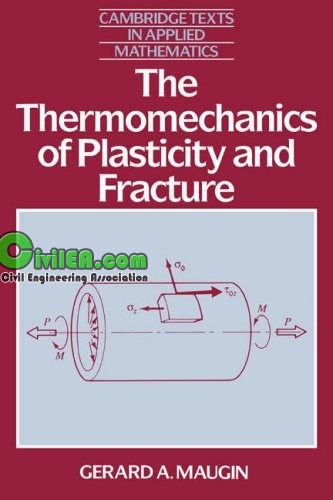
This book concentrates on the mathematical theory of plasticity and fracture, and presents it in a thermomechanical framework. It follows the macroscopic, phenomenological approach, which proposes equations abstracted from generally accepted experimental facts, studies the adequacy of the consequences drawn from these equations to those facts, and then provides useful tools for designers and engineers. Many examples of plasticity and fracture are presented, and each chapter concludes with problems for students.
Code:
Content of this section is hidden, You must be registered and upgrade your account to see this content.
🔽🔽🔽🔽🔽🔽🔽🔽🔽
See this link to read how you can remove this limitation:
👉 CLICK HERE 👈
Code:
Content of this section is hidden, You must be registered and upgrade your account to see this content.
🔽🔽🔽🔽🔽🔽🔽🔽🔽
See this link to read how you can remove this limitation:
👉 CLICK HERE 👈
This classic offers a meticulous account of the theory of finite elasticity. It covers the application of the theory to the solution of boundary-value problems, as well as the analysis of the mechanical properties of solid materials capable of large elastic deformations. Setting is purely isothermal.
Code:
Content of this section is hidden, You must be registered and upgrade your account to see this content.
🔽🔽🔽🔽🔽🔽🔽🔽🔽
See this link to read how you can remove this limitation:
👉 CLICK HERE 👈
Code:
Content of this section is hidden, You must be registered and upgrade your account to see this content.
🔽🔽🔽🔽🔽🔽🔽🔽🔽
See this link to read how you can remove this limitation:
👉 CLICK HERE 👈
While the existing literature on offshore structures touch on model testing, a comprehensive text discussing the design, construction, instrumentation, testing and analysis of the physical model is lacking. This book fills that vacuum and provides, through its survey of the theoretical and practical aspects of physical modeling, an in-depth coverage of the technology of model testing. Its usefulness runs through the entire field of engineering, reaching far beyond its focus on offshore construction; and its breadth of scope should appeal not only to engineers and naval architects but to scientists interested in structural or hydraulic testing as well.
Code:
Content of this section is hidden, You must be registered and upgrade your account to see this content.
🔽🔽🔽🔽🔽🔽🔽🔽🔽
See this link to read how you can remove this limitation:
👉 CLICK HERE 👈
Code:
Content of this section is hidden, You must be registered and upgrade your account to see this content.
🔽🔽🔽🔽🔽🔽🔽🔽🔽
See this link to read how you can remove this limitation:
👉 CLICK HERE 👈
Author: J. a. Santos, R. Fuller, Jorge A. Santos | Size: 17 MB | Format:PDF | Quality:Unspecified | Publisher: Emerald Group Publishing Limited | Year: 2002 | Pages: 342 | ISBN: 0080434126, 9780080434124
Humans are highly mobile but at a price: over a million people are killed annually on the road, at least 30 times as many are injured, of whom one in ten may be permanently disabled. How can we design a road or highway or transport system so as to provide both a high level of mobility and a high level of safety? For too long, from the perspective of the road user, highway engineers have had to employ their intuitions, personal experiences, shared "know-how" and a "suck-it-and-see" approach in many elements of highway design. Now the science of human behavior can provide both fundamental knowledge and principles to enable matching roadway and transport system design to human strengths, limitations and variability in performance; an understanding of human contributory factors in accidents; and the undertaking of informed safety audits and reviews. This book aims to help you ask the right questions about the issues raised.
Code:
Content of this section is hidden, You must be registered and upgrade your account to see this content.
🔽🔽🔽🔽🔽🔽🔽🔽🔽
See this link to read how you can remove this limitation:
👉 CLICK HERE 👈
Code:
Content of this section is hidden, You must be registered and upgrade your account to see this content.
🔽🔽🔽🔽🔽🔽🔽🔽🔽
See this link to read how you can remove this limitation:
👉 CLICK HERE 👈
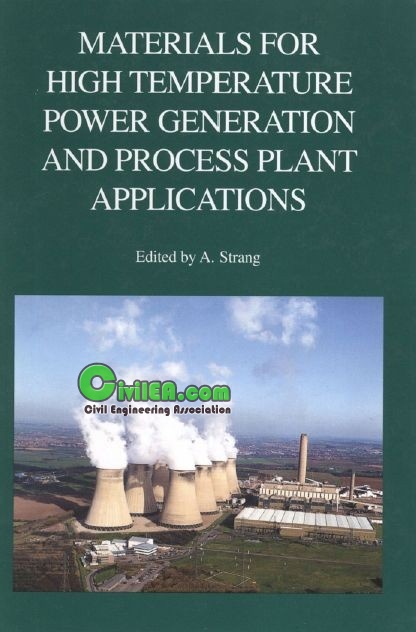
Materials for High Temperature Power Generation and Process Plant Applications
Author: Staff, M. McLean and A Strang | Size: 8.6 MB | Format:PDF | Quality:Unspecified | Publisher: Whitehurst & Clark | Year: 2000 | Pages: 351 | ISBN: 1861251033, 1861250975, 9781861251039 , 9781861250971
These are the proceedings of the fourth in a series of specialist international conferences on the microstructure of high temperature materials, held at Imperial College, London in September 1998. The papers address various aspects of the modelling of the microstructural evolution of creep resistant materials due to high temperature service exposure. The continuing importance of this subject was evident from the diversity of contributions which attracted 80 delegates from 15 countries.
Code:
Content of this section is hidden, You must be registered and upgrade your account to see this content.
🔽🔽🔽🔽🔽🔽🔽🔽🔽
See this link to read how you can remove this limitation:
👉 CLICK HERE 👈
Code:
Content of this section is hidden, You must be registered and upgrade your account to see this content.
🔽🔽🔽🔽🔽🔽🔽🔽🔽
See this link to read how you can remove this limitation:
👉 CLICK HERE 👈
Table of contents :
Content:
Front Matter, Page iii
Copyright, Page iv
Preface to Second Edition, Pages ix-x
Preface to First Edition, Pages xi-xii
Chapter I - Viscoelastic Stress Strain Constitutive Relations, Pages 1-34
Chapter II - Isothermal Boundary Value Problems, Pages 35-76
Chapter III - Thermoviscoelasticity, Pages 77-121
Chapter IV - Mechanical Properties and Approximate Transform Inversion, Pages 122-156
Chapter V - Problems of a Nontransform Type, Pages 157-186
Chapter VI - Wave Propagation, Pages 187-228
Chapter VII - General Theorems and Formulations, Pages 229-261
Chapter VIII - Nonlinear Viscoelasticity, Pages 262-291
Chapter XI - Nonlinear Mechanical Behavior, Pages 292-352
Appendixes, Pages 353-357
Index, Pages 359-364
Code:
Content of this section is hidden, You must be registered and upgrade your account to see this content.
🔽🔽🔽🔽🔽🔽🔽🔽🔽
See this link to read how you can remove this limitation:
👉 CLICK HERE 👈
Beta is pre-release testing where you test the early version products before they are released, only so Autodesk can improve them before the final release to customers.
THESE BETA's MAY NOT WORK (FULLY), THEY MAY NOT ACTIVATE, THEY MAY NOT BE THE LATEST BETA VERSIONS, THEY MAY HAVE INCORRECT INFORMATION, THEY MAY RUIN YOUR PC OR OTHER AUTODESK SOFTWARE, THEY MAY NOT HAVE ALL THE FEATURES OF THE FINAL VERSIONS, REMEMBER TO UNINSTALL BEFORE UPGRADING TO A NEWER VERSION, AND MOST OF ALL: USE AT YOUR OWN RISK!
Private Note:
See the readme inside.
Code:
Content of this section is hidden, You must be registered and upgrade your account to see this content.
🔽🔽🔽🔽🔽🔽🔽🔽🔽
See this link to read how you can remove this limitation:
👉 CLICK HERE 👈
Private Note:
Not downloaded. 7.6 GB for a beta version is too much but if someone wants...
Installed AutoCAD 2015 (see another thread) and I believe this one will work.
Code:
Content of this section is hidden, You must be registered and upgrade your account to see this content.
🔽🔽🔽🔽🔽🔽🔽🔽🔽
See this link to read how you can remove this limitation:
👉 CLICK HERE 👈
Code:
Content of this section is hidden, You must be registered and upgrade your account to see this content.
🔽🔽🔽🔽🔽🔽🔽🔽🔽
See this link to read how you can remove this limitation:
👉 CLICK HERE 👈
Beta is pre-release testing where you test the early version products before they are released, only so Autodesk can improve them before the final release to customers.
Autodesk AutoCAD 2015 (64bit) Build J051.r5 with Help (2.0 Gb)
THESE BETA's MAY NOT WORK (FULLY), THEY MAY NOT ACTIVATE, THEY MAY NOT BE THE LATEST BETA VERSIONS, THEY MAY HAVE INCORRECT INFORMATION, THEY MAY RUIN YOUR PC OR OTHER AUTODESK SOFTWARE, THEY MAY NOT HAVE ALL THE FEATURES OF THE FINAL VERSIONS, REMEMBER TO UNINSTALL BEFORE UPGRADING TO A NEWER VERSION, AND MOST OF ALL: USE AT YOUR OWN RISK!
Private Note:
See the readme inside.
Code:
Content of this section is hidden, You must be registered and upgrade your account to see this content.
🔽🔽🔽🔽🔽🔽🔽🔽🔽
See this link to read how you can remove this limitation:
👉 CLICK HERE 👈
Code:
Content of this section is hidden, You must be registered and upgrade your account to see this content.
🔽🔽🔽🔽🔽🔽🔽🔽🔽
See this link to read how you can remove this limitation:
👉 CLICK HERE 👈
Private Note:
The KG didn't works with the method described but replacing the annexed AdLM (see the last link) the activation using 2014 KG works. The included AdLM.rar in the main links is passworded and in the last link is not.
Code:
Content of this section is hidden, You must be registered and upgrade your account to see this content.
🔽🔽🔽🔽🔽🔽🔽🔽🔽
See this link to read how you can remove this limitation:
👉 CLICK HERE 👈
Code:
Content of this section is hidden, You must be registered and upgrade your account to see this content.
🔽🔽🔽🔽🔽🔽🔽🔽🔽
See this link to read how you can remove this limitation:
👉 CLICK HERE 👈
Gives engineers, research scientists and graduate students a clear understanding of the operation and control of the pyrometallurgical process. It will also be useful for technical training courses given to steel plant engineers and plant operators.
Code:
Content of this section is hidden, You must be registered and upgrade your account to see this content.
🔽🔽🔽🔽🔽🔽🔽🔽🔽
See this link to read how you can remove this limitation:
👉 CLICK HERE 👈
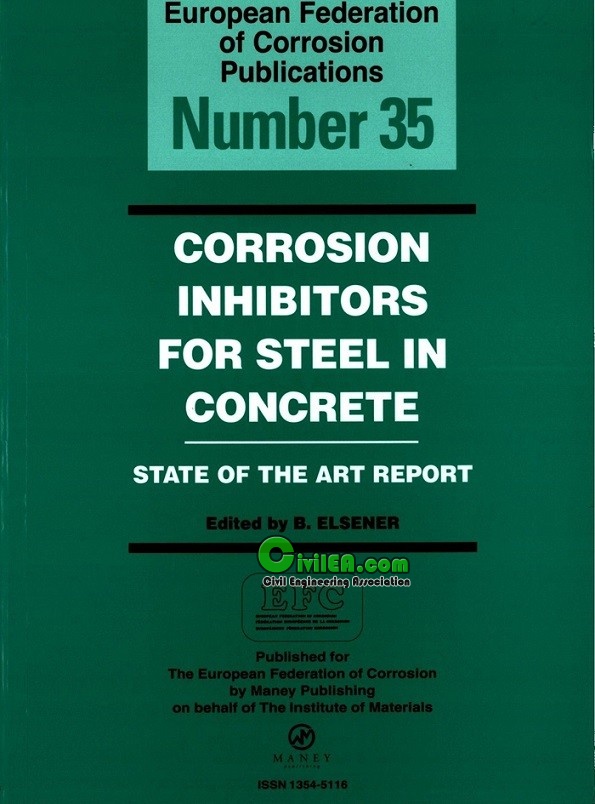
The use of inhibitors for rehabilitation of reinforced concrete structures is a new field of application and this new volume provides a State of the Art Report on this subject. Corrosion of steel in concrete is one of the major problems for infrastructure such as bridges, tunnels, housing etc. since it leads to spalling of the concrete and loss in cross section of the steel that may cause structural and safety problems. The steel in concrete generally resists corrosion as a result of a passive layer that develops on the metal surface in the alkaline environment of the concrete. Corrosion can occur if these conditions are disturbed, for example, in the presence of chlorides or with carbonation of concrete. Traditional repair methods consist in removing the deteriorated concrete and replacing it but these can be laborious, noisy and very costly. To avoid these disadvantages new methods have been developed in recent years. These include electrochemical procedures and, increasingly, the use of inhibitors. The use of inhibitors for rehabilitation of reinforced concrete structures is a new field of application and this new volume provides a State of the Art Report on this subject. The report, under the editorship of Prof. Bernhard Elsener, was prepared by a Task Group of the EFC Working Party on Corrosion of Reinforcement in Concrete. In a literature review it describes inorganic and organic chemicals that have been proposed and examined as well as the commercial corrosion inhibitors that are available on the market. Protection mechanism and possible effects of inhibitors on concrete properties are described. Practical experience with inhibitors for steel in concrete and the long term effectiveness are considered. The various test methods for evaluating the behaviour of the inhibitors are described and critically assessed. In a rapidly evolving field this State of the Art Report, based mainly on independent not commercial literature, will be of value to corrosion engineers and civil engineers concerned with maintenance and repair of reinforced concrete structures.
Code:
Content of this section is hidden, You must be registered and upgrade your account to see this content.
🔽🔽🔽🔽🔽🔽🔽🔽🔽
See this link to read how you can remove this limitation:
👉 CLICK HERE 👈